A leaking roof does not wait for a convenient day. One brown ceiling stain can turn into wet insulation, damaged drywall, mold risk, and rotten roof decking if water keeps getting in.
The right move is not to panic. It is to slow the damage, find the likely source, and decide whether you need a temporary patch, a roof repair, or a full replacement.
This guide is written for Connecticut homeowners dealing with active leaks, storm damage, ice-dam issues, missing shingles, flashing leaks, and roof penetrations that have started letting water inside.
First: Stop Interior Damage Before You Touch the Roof
If water is dripping inside, start indoors. Your goal is to protect the house before you try to diagnose the roof.
- Move furniture, electronics, rugs, and valuables away from the leak.
- Put a bucket or pan under the drip. Add a towel inside the bucket to reduce splashing.
- Relieve a ceiling bulge carefully. If paint or drywall is sagging with trapped water, place a bucket underneath and make a small puncture at the lowest point so the water drains in a controlled way. This can reduce the chance of a larger ceiling collapse.
- Take photos and video. Capture the ceiling stain, active dripping, attic moisture, damaged shingles from the ground, and any storm debris. Documentation matters whether you are paying out of pocket or discussing damage with your insurance carrier.
- Shut off power in the affected area if water is near lights, outlets, or wiring. Do not touch wet electrical fixtures.
If the leak is severe, the ceiling is sagging, or water is near electrical components, stop and call a qualified professional.
Do Not Climb on a Wet or Storm-Damaged Roof
A wet roof is a fall hazard. A steep roof, icy roof, or wind-damaged roof is even more dangerous. OSHA treats falls as one of the most serious construction hazards, and roof work requires proper fall protection under OSHA fall protection guidance.
For most homeowners, the safest inspection starts from:
- Inside the attic with a flashlight
- The ground with binoculars
- Upper-story windows if you can see the roof safely
- Photos taken from a safe distance
Do not climb onto a roof during rain, snow, ice, high wind, or after storm damage. If you cannot inspect safely, contact Trust Proof Roofing and have the roof checked by our team. Trust Proof Roofing is licensed in Connecticut: CT HIC #HIC.0703927.
How to Find Where a Roof Leak Is Coming From
The drip inside your house is rarely the exact entry point. Water can enter around a pipe boot, chimney, valley, skylight, vent, nail hole, or missing shingle, then travel along rafters or decking before it finally appears on your ceiling.
Start in the attic
If your attic is accessible, inspect it during daylight or while it is raining, if you can do so safely.
Look for:
- Dark water stains on roof decking
- Wet insulation
- Drips along rafters
- Rusted nail tips
- Mold-like staining or musty odor
- Daylight coming through roof boards
- Water trails that run down from a higher point
Trace the water upward. The entry point is often higher on the roof than the ceiling stain.
Check the roof from the ground
From outside, look for visible clues:
- Missing, lifted, cracked, or curled shingles
- Exposed nail heads
- Damaged ridge caps
- Loose or bent flashing
- Cracked rubber pipe boots
- Debris piled in valleys
- Gutters overflowing or pulling away
- Tree limbs scraping the roof
- Ice buildup along eaves in winter
Take photos even if you are not sure what you are seeing. A clear photo can help a roofer narrow down the likely leak area before the visit.
Common Causes of Leaky Roofs in Connecticut
Connecticut roofs deal with heavy rain, wind, freeze-thaw cycles, snow, and ice dams. Those conditions make some leak sources especially common.
1. Pipe boot failure
Plumbing vent pipes come through the roof and are sealed with a boot. Over time, the rubber can crack or pull away from the pipe. This often creates a leak that shows up in a bathroom, closet, hallway, or attic area below the pipe.
2. Missing or lifted shingles
Wind can lift shingles and break the seal strip. Once the shingle is loose, water can work underneath it. Missing shingles are easier to see from the ground, but lifted shingles may require a closer inspection.
3. Flashing leaks
Flashing protects roof transitions: chimneys, walls, skylights, dormers, valleys, and roof edges. If flashing is bent, rusted, loose, poorly sealed, or installed incorrectly, water can enter even if the shingles look fine.
4. Ice dams
In winter, heat escaping from the home can melt snow on the roof. The melted water runs down and refreezes near the colder eaves, creating an ice dam. Water can back up under shingles and leak into the house. Ice dam leaks often show near exterior walls, ceilings, and upper-floor rooms.
5. Clogged gutters
When gutters overflow, water can back up at the roof edge, soak fascia, or spill against siding and trim. It may look like a roof leak, but the cause may be drainage.
6. Old or brittle roofing materials
Older shingles lose flexibility and granules. Once they crack, curl, or lose surface protection, leaks become more likely. The International Association of Certified Home Inspectors lists typical asphalt shingle life expectancy ranges by material and condition in its life expectancy guide, but Connecticut weather and ventilation conditions can shorten or extend real-world performance.
Temporary Ways to Slow a Roof Leak
Temporary fixes are meant to buy time. They are not a permanent repair.
If you can access the attic safely
You may be able to slow the leak from inside by:
- Placing a bucket under the active drip
- Moving wet insulation away from drywall so it can drain into a container
- Marking the wet area with tape or a pencil so it can be found later
- Taking photos of the leak path before it dries
Do not seal wet materials inside a wall or ceiling. Trapped moisture can create bigger problems.
If a tarp is needed
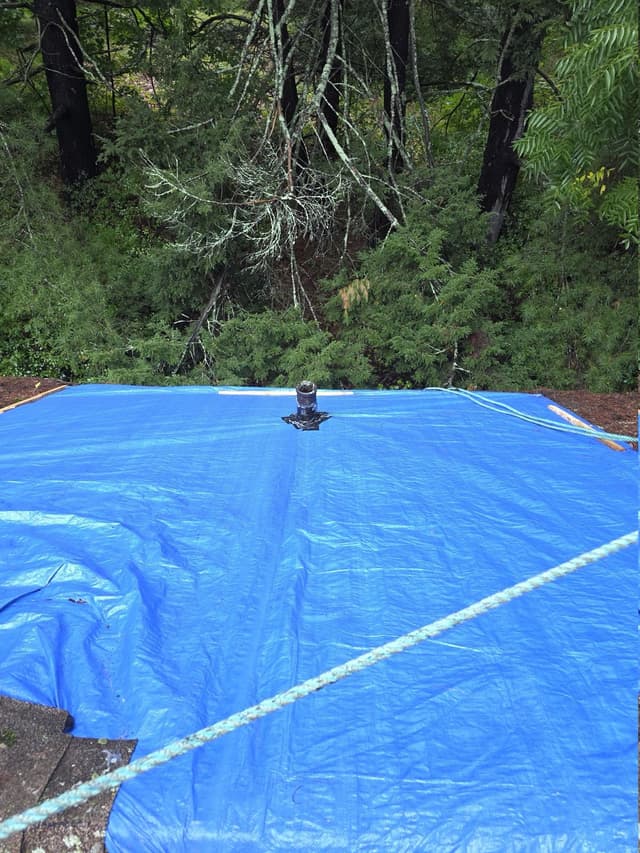
A tarp can reduce water entry until the roof is repaired, but tarping a roof is dangerous if done without the right equipment. A tarp also has to be placed above the leak source, not just over the ceiling stain location.
If you cannot tarp the roof safely from a stable position, do not attempt it. Call a roofing professional.
Temporary protection is an interim step
A real Trust Proof work-stage photograph. A tarp does not replace diagnosis or the permanent written repair scope. Project locations are stated only where verified; other-town photographs illustrate the repair topic.
What not to do
Avoid these common mistakes:
- Do not smear caulk over random shingles and hope it works.
- Do not nail through shingles unless you know how the holes will be sealed.
- Do not walk on wet, icy, or steep roofing.
- Do not ignore a leak because it stopped raining.
- Do not paint over the ceiling stain before the roof is fixed and the area is dry.
A leak that disappears after the storm can still return during the next rain.
When a Roof Leak Can Usually Be Repaired
A targeted roof repair may be the right answer when the roof is otherwise in workable condition and the leak has a clear source.
Common repair candidates include:
- One or a few missing shingles
- A failed pipe boot
- A small flashing issue
- A localized ridge cap problem
- A minor storm-damaged area
- A leak around one roof penetration
Trust Proof Roofing handles roof leak repair, storm damage repair, flashing repair, missing shingles, and minor structural roof repairs across Connecticut. Repairs include a 1-year leak-proof warranty on the repaired area. You can see our roof repair services or get an instant quote.
For Connecticut roof leak repairs, Trust Proof Roofing’s public repair tiers are: small repair $400–$600 and big repair $800–$1,300. For comparison, the Angi 2026 roof leak repair benchmark is $700–$3,000, median $900. To price your specific repair, get an instant quote.
When a Leaky Roof May Need Replacement Instead
A repair fixes a specific failure. It does not reset an aging roof.
A full roof replacement may make more sense if:
- Leaks are showing up in multiple areas
- Shingles are brittle, curling, or losing heavy granules
- Roof decking is soft or rotted in several sections
- Flashing failures are widespread
- The roof has repeated leak history
- Storm damage affects a broad roof slope
- The roof is near the end of its service life
If replacement is the right path, Trust Proof Roofing provides satellite roof measurement, photos, and a line-item digital proposal so you can see the scope before making a decision. Full roof replacements include an in-house 20-year leak-proof warranty on workmanship-related leak issues. Learn more about roof replacement or get an instant quote.
What a Professional Roof Leak Inspection Should Show You
A good roof leak inspection should not be a mystery. You should be able to see what the roofer sees.
Ask for:
- Photos of the suspected leak source
- Photos of attic staining or wet decking when accessible
- A plain-English explanation of the failure
- A repair vs replacement recommendation
- A written scope of work
- A line-item proposal
- Warranty terms in writing
This is where Trust Proof Roofing’s process is different from the clipboard experience. You get roof measurement, photos, and a written digital proposal after assessment so you can compare the evidence, not just the sales pitch.
What to Do If the Leak Came From a Storm
If the leak started after wind, hail, falling limbs, or a major storm, document everything before cleanup where practical.
Take photos of:
- Interior water damage
- Exterior roof damage visible from the ground
- Fallen branches or debris
- Damaged gutters or siding
- Attic moisture
- Any temporary protection installed
If you use insurance, your role is to contact your carrier and follow your policy process. Trust Proof Roofing can inspect, document damage with photos and measurements, and work alongside you as you work through the claim. We do not file or manage the claim for you, and we do not promise any specific payout. We provide documentation so the scope can be reviewed with evidence.
Quick Decision Guide
Use this simple guide:
| What you see | What it may mean | Best next step | |---|---|---| | One ceiling stain after heavy rain | Localized leak or flashing issue | Inspect attic and book a roof repair assessment | | Drip near bathroom or hallway | Possible pipe boot leak | Photograph attic/ceiling area and request repair | | Water near chimney or wall | Flashing issue | Have flashing inspected | | Leak near exterior wall in winter | Possible ice dam | Address active water, then inspect roof edge and ventilation | | Multiple stains in different rooms | Larger roof system issue | Consider full roof assessment | | Sagging ceiling or electrical risk | Active safety concern | Stop using affected area and call for help |
The Connecticut Homeowner’s Next Step
If you have an active roof leak, start with damage control inside. Then gather photos and avoid unsafe roof access. The faster the leak source is documented, the easier it is to choose the right fix.
Trust Proof Roofing serves Connecticut homeowners with roof repairs, roof replacements, 3D drone measurement, photo documentation, and written digital proposals. Repairs include a 1-year leak-proof warranty on the repaired area. Full replacements include an in-house 20-year leak-proof warranty.
If you want proof before you decide, start here: Get an instant quote. If you would rather speak with Tenzin and book an inspection, contact Trust Proof Roofing.
When the fix is beyond a patch, our leak repair service covers all 8 CT counties, small repairs run $400 to $600 with a written 1-year leak-proof warranty, and the repair vs replacement guide walks the bigger decision.