Question 1
What should I do immediately when my roof starts leaking?
Protect people first, then arrange an assessment of the water entry and any temporary protection. An active leak does not make a wet roof safe to access.
Keep away from a sagging ceiling, wet fittings or damaged wiring. Move possessions only where the floor and ceiling are safe. Do not puncture a bulging ceiling, touch electrical equipment in a wet area, or climb onto the roof. If there is immediate danger, leave the area and call emergency services.
From a safe indoor position, note when the leak began and photograph the stain without exposing private documents. Call us with the town, whether water is still entering and any visible storm damage. We confirm availability; a web enquiry is not an emergency dispatch.
Temporary weather protection and permanent repair are separate scopes. We identify safe access, explain any work that must wait for weather to improve, and document the area treated. Interior drying, electrical work and ceiling repairs need their own qualified assessment.
Reference: Connecticut Insurance Department: winter claims
Question 2
How can the source of a roof leak be located?
The ceiling stain is a starting point, not a reliable map of the outside defect. Water can travel before it becomes visible.
Useful clues include the first wet location, the delay after rain starts, wind direction and whether nearby plumbing was used. We compare that history with the roof covering, transitions and accessible interior evidence; a 3D exterior view cannot see through the assembly.
Keep a simple rain-and-drip record and provide photos taken from safe locations. Do not open a wet ceiling or enter an unsafe attic to trace the water yourself. Tell us about earlier repairs even if their purpose is uncertain.
The written scope should identify what evidence supports the suspected entry point, what can be repaired and what remains concealed. Opening an area or controlled diagnostic work may be necessary and should be agreed before proceeding. A repair at the stain alone can miss the source.
Reference: IKO: finding roof leaks
Question 3
Why does my roof leak only during heavy or wind-driven rain?
A leak limited to certain storms can indicate a detail that sheds ordinary rain but fails when water is driven toward a joint or backs up. The timing is evidence, not a diagnosis.
We consider wall junctions, flashing laps, roof penetrations, drainage and roof-covering damage. A dry-weather visit may reveal a defect, but it may not reproduce the exact storm conditions. Several paths can lead to the same indoor stain.
Write down which storms caused trouble and whether the leak started immediately or later. A photo of a wet wall or window from inside can help. Do not hose-test a roof yourself or climb up during the weather event.
The repair may involve rebuilding a water-shedding detail rather than covering it with sealant. Access, adjoining materials and how much must be opened affect the scope. Follow-up should compare the same symptom after comparable weather, without promising that every concealed cause is solved by one small patch.
Reference: IKO: finding roof leaks
Question 4
Is a ceiling stain caused by roofing, plumbing or condensation?
Not every stain is a roof leak. Rain-related entry, a plumbing leak and condensation can need different trades and different repairs.
Tell us whether water appears during rain, after using a bathroom, or in cold weather without rain. We look for a consistent explanation instead of selling roofing work solely because a ceiling is discolored. An old dry stain also differs from active moisture.
Keep the affected area clear and record the conditions when it becomes wet. Do not touch wet electrical fixtures or remove finishes to investigate. If plumbing use clearly triggers the problem, arrange a plumber as well as any roofing assessment that remains necessary.
We explain the limits of a roof inspection and identify when another assessment is needed. Roofing scope does not automatically include plumbing, insulation, ventilation upgrades, mold remediation or interior restoration. Separate causes may coexist, so a roof repair alone is not a universal cure.
Reference: IKO: repair or replacement signs
Question 5
Why is my roof leaking around the chimney?
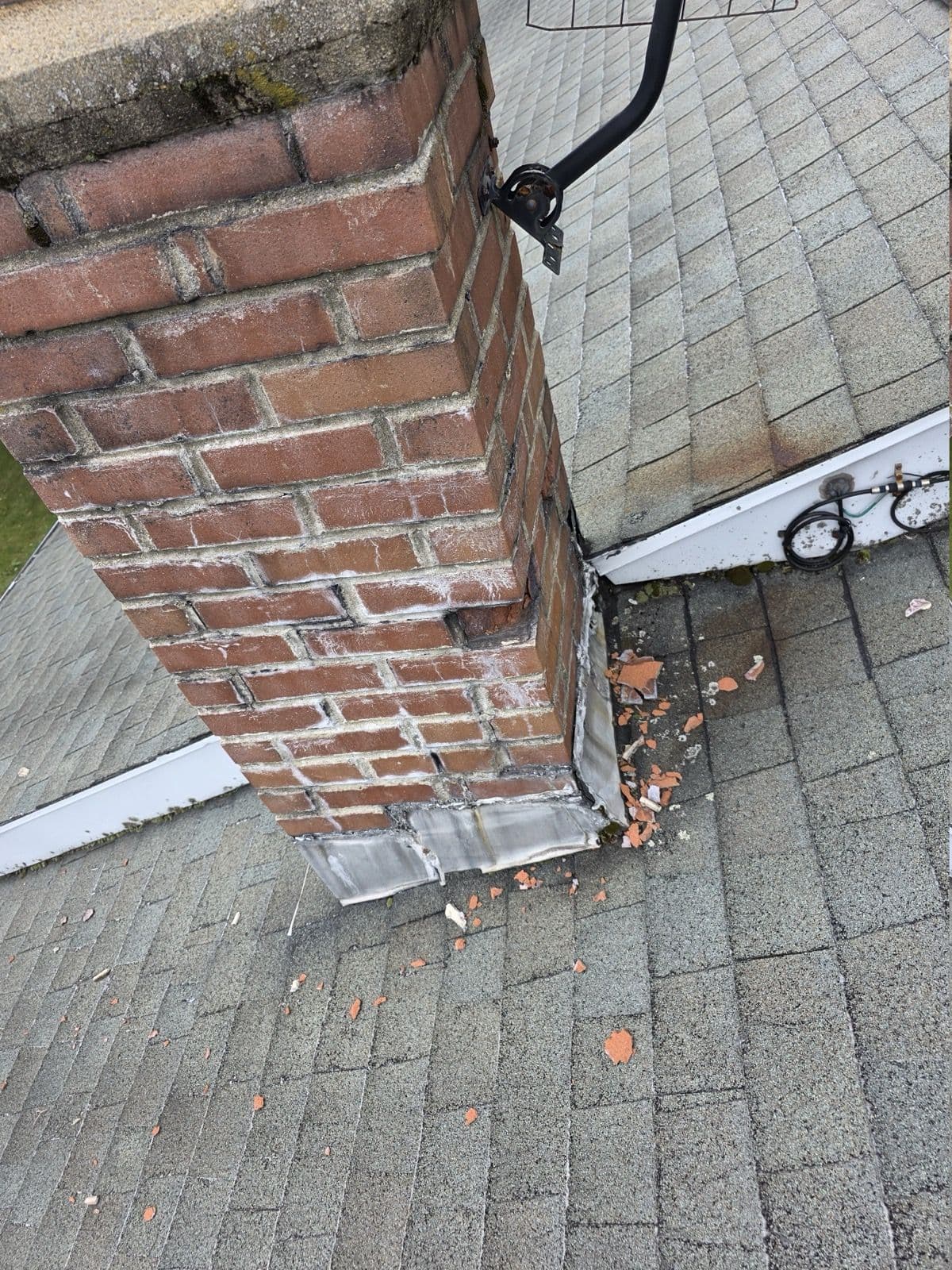
The roof-to-chimney connection is one possible entry path, but masonry, the chimney cap and other adjoining details can also be involved.
We assess the flashing arrangement and nearby roof covering and look for visible evidence that water is entering above that junction. Sealing the outside edge without understanding the concealed laps may leave the underlying path unchanged.
Photograph the indoor symptom safely and tell us whether a chimney or masonry contractor has worked there before. Stay off the roof. A damaged chimney can require a masonry specialist rather than a roofing-only patch.
Our proposal separates roof flashing work from chimney rebuilding, flue or cap work. Access behind siding or counterflashing and concealed decking damage can change the extent of work. We confirm exclusions and the repair-area coverage in writing before opening the junction.
Reference: IKO: roof flashing
Question 6
Why does a skylight leak?
Water near a skylight may come from the surrounding roof detail, the skylight assembly or condensation. The location alone does not identify the failed part.
Condensation can occur when indoor moisture meets a colder surface. We distinguish wet glass from water entering at the frame or roof opening, and inspect the roof connection where safely accessible. Product age and identification matter when parts are needed.
Note whether the problem happens without rain and photograph the glass and nearby stain from indoors. Do not climb up to smear sealant around the unit. Tell us the skylight brand or model only if you have it in existing paperwork.
A repair may address flashing, adjoining roofing or a compatible service part; an obsolete or damaged unit can need specialist replacement. Roof work and glazing/product warranties are different. We do not promise that every skylight can be repaired or apply a manufacturer warranty to unrelated labor.
Reference: VELUX: skylight condensation
Question 7
Can pipe boots or roof vents cause leaks?
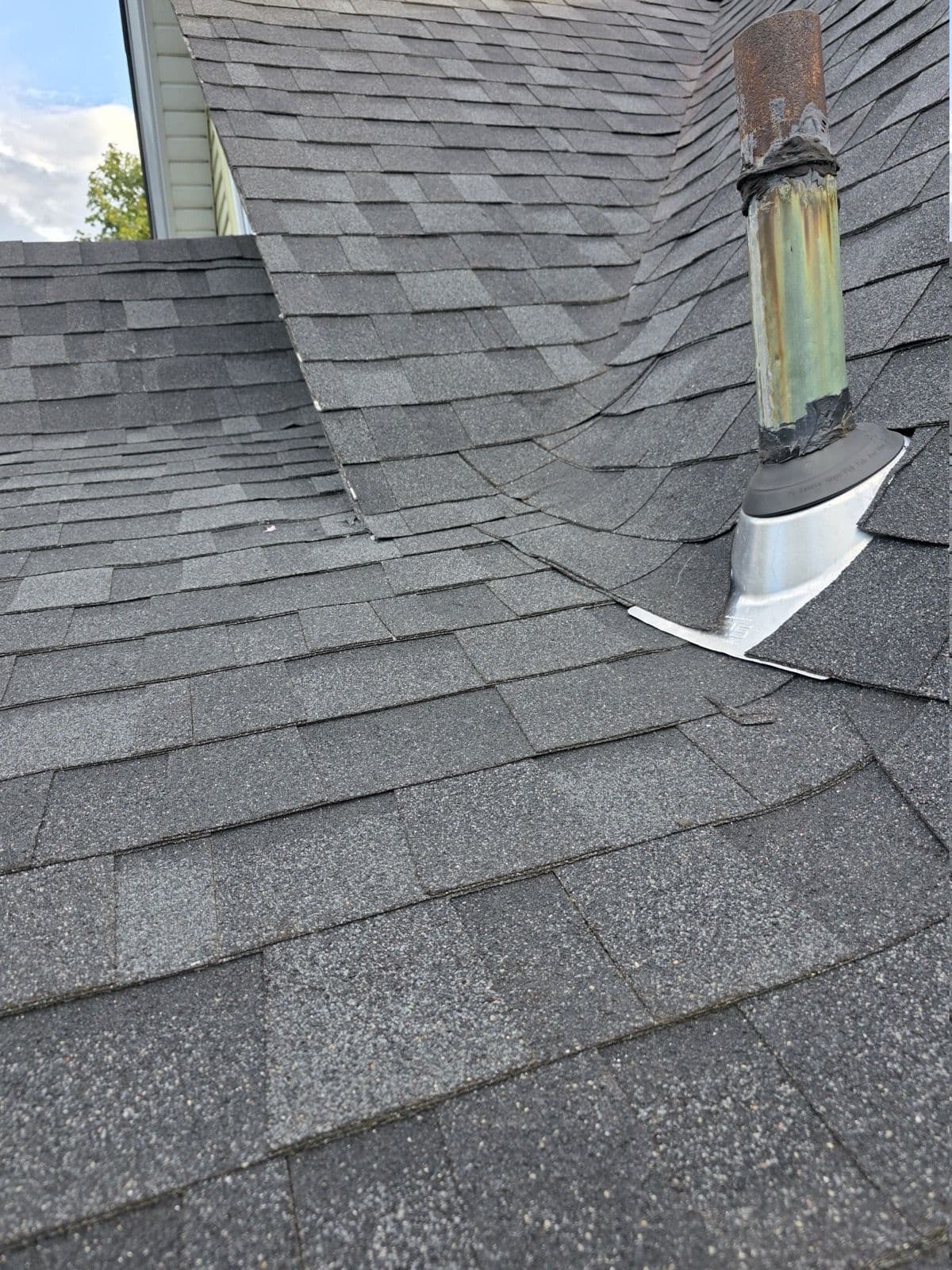
Yes. A penetration detail is a possible entry point, but a nearby stain still needs diagnosis before the vent is blamed.
The assessment considers the boot or flashing, its connection to the covering and the surrounding material. A split flexible collar, an exposed fixing or a poorly arranged lap calls for different work from a plumbing issue inside the pipe.
From the ground, note which roof plane sits above the wet area. There is no need to identify the exact fitting from a ladder. Avoid disturbing a vent or covering its opening; it has a separate building-system function.
The written repair identifies the penetration and compatible replacement detail, including how it will join the existing roof. Plumbing changes are excluded unless separately arranged. A visible bead of sealant should not be presented as equivalent to rebuilding a failed flashing connection.
Reference: IKO: roof flashing
Question 8
How do valleys and roof-to-wall junctions develop leaks?
These junctions concentrate water or interrupt its path down the roof. The layers must direct water out onto the roof or into drainage, rather than behind a wall.
We look at the junction as an assembly: covering, concealed flashing or membrane, adjacent siding and drainage. A small visible defect may require opening a larger area to make a sound connection. A photograph cannot show all the layers.
Describe where the indoor symptom appears relative to an addition, dormer or wall. Keep old repair photos if you have them. Do not pull siding or shingles aside to inspect the detail yourself.
The scope should explain what will be removed, how the junction will be rebuilt and which finishes can be reused. Our real Suffield and New Britain examples show wall-junction work, not proof that the same method fits every house or material. Hidden damage is handled through an agreed change in scope.
Reference: IKO: roof flashing
Question 9
Can missing, cracked or lifted shingles be repaired?
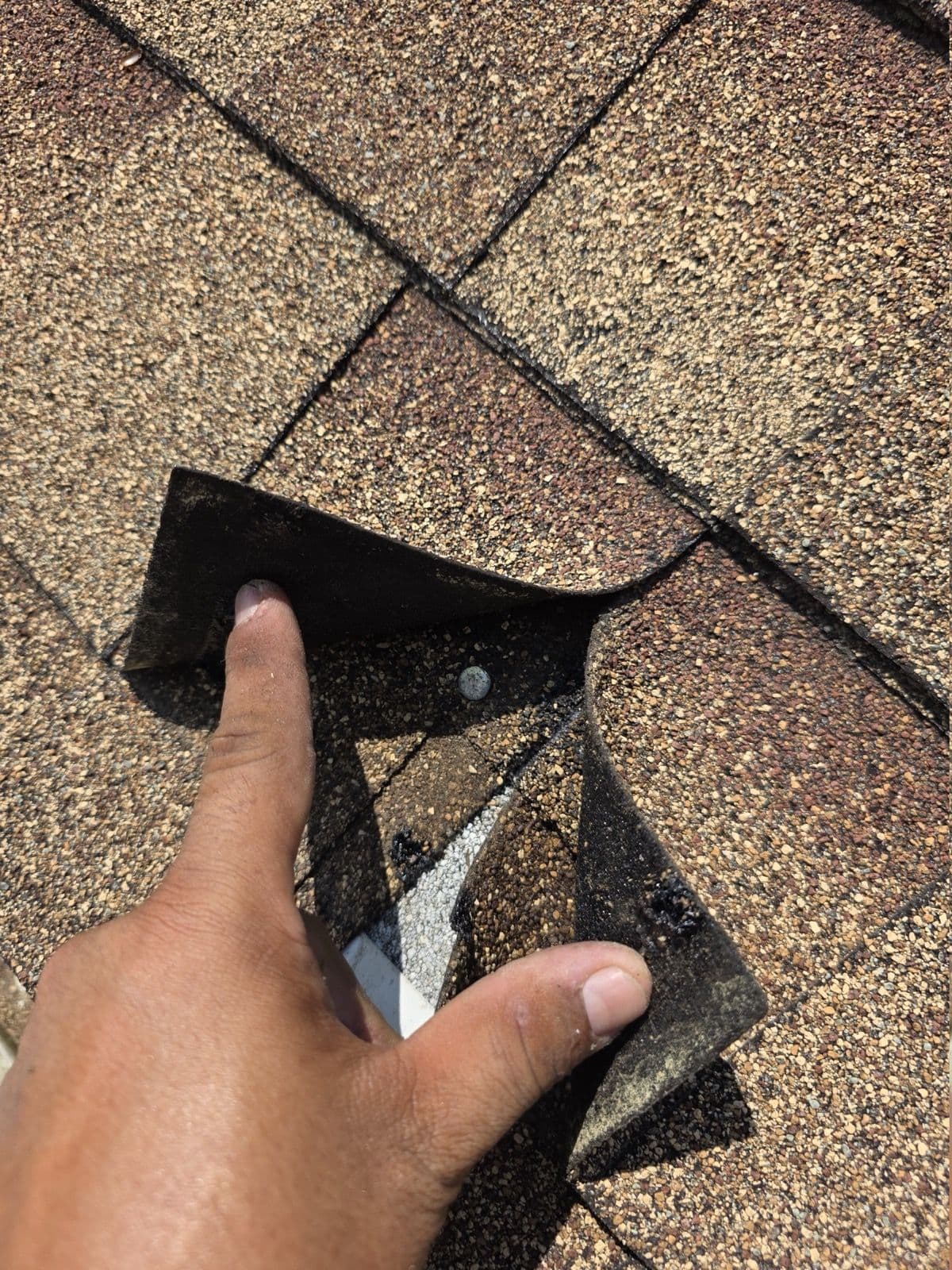
A localized shingle problem can be repairable when the surrounding roof is sound enough to receive a compatible repair. Missing shingles do not automatically require a full replacement.
We assess the affected area and the condition of adjacent courses. Brittle material, widespread deterioration, underlying damage or repeated failures may make a small patch less durable than it appears. Appearance and color matching are separate from making the detail weather-resistant.
Take ground-level photos after the weather has passed and tell us if loose material has fallen. Keep away from hanging debris. Do not lift tabs or nail loose shingles back down yourself.
The proposal should identify the repair boundary, materials and any matching limitations. We explain when more investigation is needed instead of quoting a universal price per shingle. Repair-area workmanship coverage does not become a warranty on the remaining old roof.
Reference: IKO: repair or replacement signs
Question 10
How are leaks on flat or low-slope roofs assessed and repaired?
The roof system must be identified before a repair method is chosen. A low slope is not enough information to select a patch or coating.
For a residential roof or addition, we assess accessible seams, penetrations, edge details and drainage and confirm the material. Wet insulation or concealed damage can extend beyond the visible opening. We do not assume every low-slope system falls within our repair scope.
Provide existing roof records or product information if available, and tell us about ponding visible from a safe position. Stay off the surface and do not apply a generic coating to an unidentified membrane.
After assessment we confirm whether we can perform a compatible localized repair or whether a specialist is needed. Access, system identification, drying and the extent of damaged layers influence price and scheduling. Commercial-building roofing and universal membrane repair promises are outside this offer.
Reference: Carlisle SynTec: roof systems and building-owner assessment resources
Question 11
What can cause a metal roof to leak?
Metal roof leaks may involve a penetration, joint or attachment detail rather than the panel field. The particular system matters.
We distinguish standing seam and exposed-fastener arrangements and look at the reported symptom, accessible junctions and prior repairs. A fastener adjustment is not a substitute for diagnosing an incorrectly detailed transition. Concealed conditions may require specialist review.
Share the roof-system name or installer records if you have them. Do not walk the panels or add incompatible sealant. A surface that looks dry can still be slippery, and panel damage from foot traffic can create another problem.
We confirm repair capability after identifying the system and detail. A localized repair proposal should state the material compatibility, extent of dismantling and limitations. It is not a commitment to refinish the entire roof, repair every metal product or replace it automatically.
Reference: Metal Construction Association: standing-seam roof penetrations
Question 12
How do ice dams and melting snow cause roof leaks?
Meltwater can back up behind ice at a colder roof edge and reach places the roof normally sheds water away from. Stopping the immediate entry and reducing recurrence are separate tasks.
Roof-edge damage needs assessment, but repeated ice dams may also involve heat loss, air leakage or insulation conditions. Roofing repairs alone cannot establish that the building-side cause has been resolved. Icicles are not a safe invitation to investigate from below.
Keep people away from falling ice and the affected interior area. Do not chip ice from the roof, use an open flame or climb onto snow-covered roofing. Call to discuss safe assessment and any temporary protection that is feasible.
We separate temporary response, permanent repair to damaged roof details and recommended building-performance follow-up. Work depends on access and suitable conditions. The written scope states which task is covered; it does not promise a permanently ice-free roof or automatic insurance payment.
Reference: U.S. Department of Energy: preventing ice dams
Question 13
Can clogged gutters cause roof-edge leaks?
Blocked or defective drainage can contribute to overflow and wet roof-edge materials, but gutter cleaning is not automatically a repair for every leak.
We look at where water is going and whether the gutter, fascia, edge detail or an adjoining roof defect is involved. Rot or staining may record a long history and require more than clearing debris. The roofing and gutter scopes should be explicit.
Observe overflow from ground level during rain only if you can do so safely. Do not climb a wet ladder to clear it. Keep photos of the location and tell us whether the problem stops after the rain or continues.
Possible work ranges from a defined gutter service to repair of a damaged roof edge after assessment. Fascia carpentry or hidden deterioration may require a revised written scope. A roof-area warranty is not a promise that unmaintained drainage will never overflow.
Reference: IKO: roof flashing
Question 14
Can a leaking roof be repaired instead of replaced?
Often a localized defect can be repaired, but the decision depends on the surrounding roof and the cause of the leak. Age alone is not a complete diagnosis.
We assess whether a repair can join sound materials, whether problems are isolated or widespread, and whether earlier work has repeatedly failed. The recommendation should explain the evidence for repair, further investigation or replacement without treating every repair enquiry as a replacement lead.
Bring prior repair records and explain what you want to preserve. Do not rely on a roof-age guess or a ceiling photograph as a complete assessment. A dry interior on inspection day does not erase the history of an intermittent leak.
Compare the proposed repair boundary, expected limitations and cost with any alternative. If replacement is discussed, it has a separate scope and warranty. The replacement Best Price & Value Guarantee and 20-year workmanship offer are not repair benefits.
Reference: IKO: repair or replacement signs
Question 15
What affects the cost of roof-leak repair in Connecticut?
Repair cost depends on diagnosis, safe access, the detail being rebuilt and the materials or damage uncovered. A minimum charge is not a quote for every leak.
Our approved pricing guidance is $300 per hour plus materials, with a $400 minimum, or $500 beyond 50 miles from Hartford. Many small repairs are described in our pricing records around $400–$600 and larger repairs around $800–$1,300; these are examples, not fixed packages or a promise for your roof.
Request a written assessment of the proposed area and ask which charges apply before authorizing work. There is no need to climb the roof to measure a defect. Town names do not justify an invented surcharge; the actual access, distance and scope matter.
The free inspection is no-obligation; repair work and separately agreed investigation or opening-up work are not automatically free. Any hidden damage, additional trade or changed scope must be explained. The estimate should separate labor, materials, exclusions and applicable minimums.
Reference: Trust Proof: repair pricing
Question 16
Can a leak be fixed from inside, or with sealant alone?
An interior patch may hide the symptom while water continues entering the roof assembly. Sealant is useful only where it is part of an appropriate repair detail.
We identify the outside water-entry path and the materials involved. Existing roof cement over a joint may indicate an earlier attempt, not proof the underlying detail is sound. A concealed leak can continue without an obvious drip into the room.
Do not climb into an unsafe attic, open a wet ceiling or apply products near wiring. Move away from sagging finishes. Record the symptom and arrange professional assessment rather than trying to stop water at an electrical fitting or ceiling opening.
Temporary containment or weather protection buys time; permanent repair addresses the entry detail and checks adjoining damage. Our written scope distinguishes these tasks. Interior decoration, drying and structural repairs are separately assessed and are not silently included in a small roof patch.
Reference: IKO: finding roof leaks
Question 17
Can roof repairs be done during rain or winter weather?
Some temporary protection may be possible, but safe access and the repair materials determine what can proceed. A requested date is not a promise that weather will permit permanent work.
Rain, ice, wind, roof slope and surface conditions affect the work plan. Product requirements and the ability to make a dry, sound connection also matter. We confirm the scope after assessment rather than promise year-round installation of every repair method.
Call about an active leak and keep the area below any damage clear. Do not go onto the roof to prepare it for us. If conditions change after an appointment is arranged, tell us whether water is entering or the damage has worsened.
We explain whether the next visit is an assessment, temporary protection or permanent repair and what follow-up is needed. Emergency availability is confirmed directly; there is no fixed arrival-time guarantee. Delaying an unsafe operation is part of protecting the household and crew.
Reference: Connecticut Insurance Department: winter claims
Question 18
How long does a repair take, and what affects its durability?
A small accessible defect may take much less work than a concealed junction repair, but the time and durability depend on the confirmed scope. We do not promise every leak is a same-day fix.
Diagnosis, setup, access, removal, compatible materials and cleanup all take time. Hidden decking damage or the need for a different trade can change the plan. A short time on the roof is not, by itself, evidence of a durable repair.
Keep the access area available as agreed and tell us about pets, gates or other site constraints when arranging the visit. You do not need to climb the roof before or after the work. Save the written scope and completion photos for follow-up.
The handover should state what was repaired, anything left outside scope and how to report a recurrence. The approved one-year workmanship coverage applies to the authorized repaired area under written terms; it is not a predicted remaining life for the whole roof.
Reference: Trust Proof: written repair warranty
Question 19
When might homeowners insurance cover roof-leak damage?
Coverage depends on the policy and cause of loss. A roofer can document observed damage, but your insurer decides coverage; a leak does not automatically mean the roof will be replaced.
Sudden storm damage and deterioration or maintenance issues can be treated differently. The Connecticut Insurance Department also cautions that policy terms vary and some temporary-response costs may be treated differently from resulting damage. Do not assume an online description matches your policy.
Contact your insurer, keep safe photographs and receipts, and ask about inspection requirements before permanent repairs. Take reasonable protective action only when safe. Do not delay an emergency response to an immediate hazard while waiting for a coverage decision.
We can provide a written roofing scope and photographs of observed conditions. We do not guarantee payment, waive a deductible or present ordinary aging as storm damage. Ask the insurer to explain any coverage decision; this guide is general information, not a determination of your claim.
Reference: Connecticut Insurance Department: winter claims
Question 20
What should a written roof-repair warranty cover?
It should identify the repaired area, covered workmanship, coverage period, exclusions and the process for reporting a problem. Our general approved repair coverage is one year for the authorized repaired area, subject to written terms.
Make sure the description distinguishes the repair from the remaining old roof and from any separate material warranty. A manufacturer product promise, a contractor workmanship promise and an estimate are different documents. Do not assume a short repair transfers coverage to every nearby surface.
Keep the scope, invoice and completion record together, and contact the company when a problem recurs. Document the indoor symptom from a safe location. Do not disturb the repair yourself or allow an unrelated patch without checking how that affects the written terms.
Ask how concealed damage, new storm damage, maintenance and work outside the agreed area are handled. Replacement-only benefits are not included in this repair offer. The practical goal is a named responsible contractor and clear follow-up, not an unrestricted promise that a house can never leak.
Reference: Trust Proof: written repair warranty