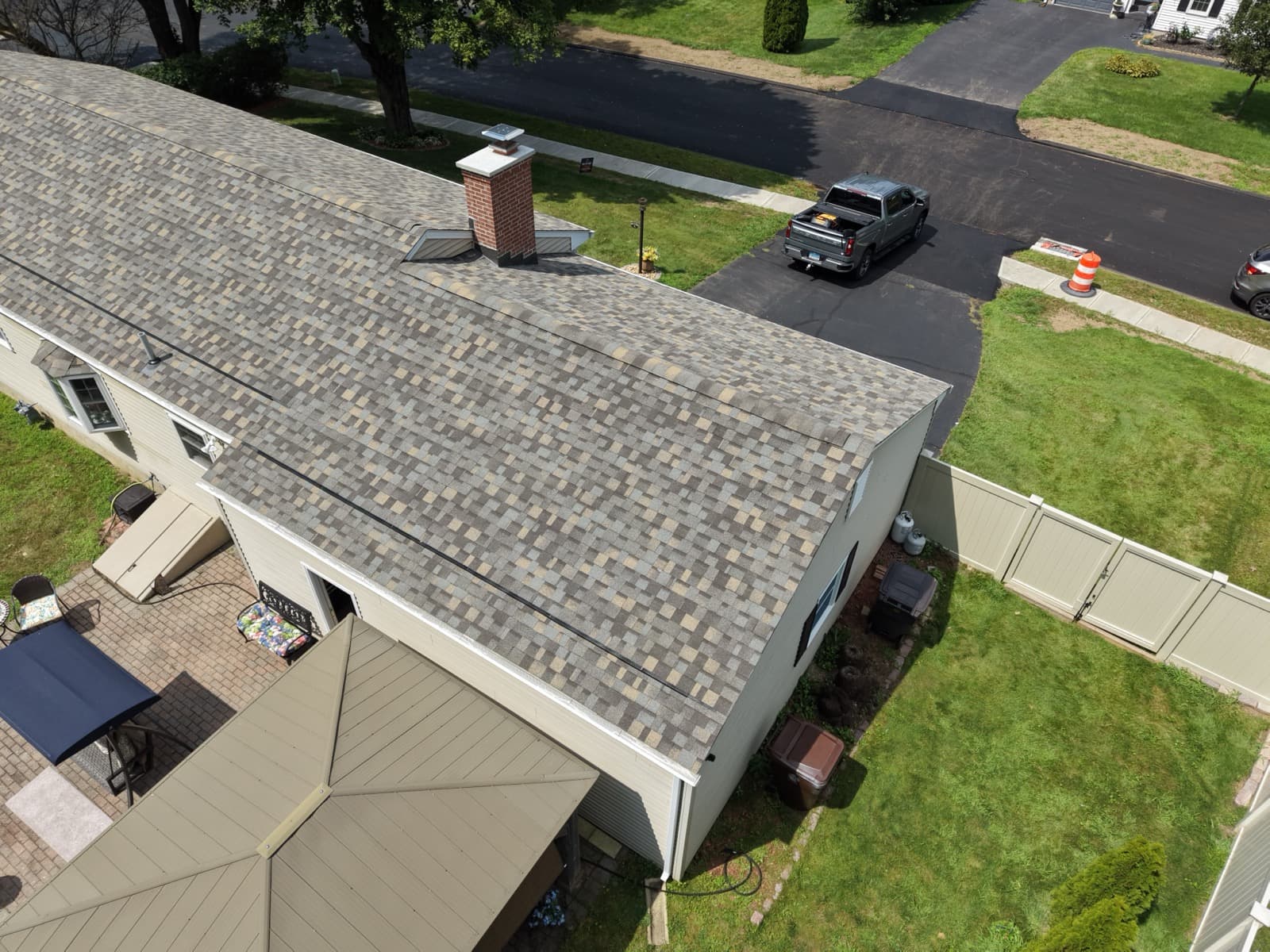
The truck has a familiar name on the door. The salesperson shows up with a tablet, a drone video, and a polished pitch. What the sign does not tell you is who actually owns the company, who will physically be on your roof, and who will still be answering the phone when a shingle lifts eight years from now. In Connecticut roofing right now, those are three different questions with three different answers, and they are worth asking before you sign anything.
What is quietly happening to roofing companies
Over the last several years, investor groups and private equity firms have been buying up roofing contractors across the country, including well-known names operating here in Connecticut and New England. This is not speculation, it is trade news: seven of the ten largest roofing contractors in the country are now affiliated with a private equity group. Erie Home, one of the biggest residential roofing brands in the Northeast, was folded into Gridiron Capital's Leaf Home platform in 2025. Omnia Exterior Solutions, built by the private equity firm CCMP, has been buying local roofers at a rapid clip while deliberately keeping their local branding, and Infinity Home Services, backed by the investment firms LightBay Capital and Freeman Spogli, leads the industry in residential roll-ups. It has reached Connecticut too: JP Carroll Roofing of Bloomfield, one of the best-known roofing names in the state since 1987, is now part of Vertex Service Partners, the roofing platform launched in 2023 by the private equity firm Alpine Investors, and Omnia entered New England with its eighth acquisition of 2024, the Maine roofer James & Whitney. Power Home Remodeling, the Pennsylvania giant whose roofing, window, and siding ads blanket Connecticut, took new investment from Bain Capital and Sixth Street in 2026, with the private equity firm Harvest Partners as its largest investor. The playbook is consistent: buy a contractor with a good local reputation, keep the name on the trucks, plug it into a regional sales machine, and grow the revenue fast so the whole platform can be sold again in a few years.
None of that is illegal. But it changes who the company works for. A roofer who answers to a fund has to hit a number every quarter. A roofer who answers to his neighbors has to be right about every roof.
How the investor-backed model usually works
Every company is different, so treat this as the pattern to check for, not an accusation against any one brand:
- The person who quotes your roof is a commissioned salesperson. They are often paid on ticket size, trained on closing scripts, and may never see your house again after the contract is signed.
- The installation is frequently subcontracted. The crew on your roof can be a different business entirely, paid by the square, and a different crew than the one on your neighbor's job last month. Ask any roofing contractor in CT directly: are the installers your employees, and whose workers' compensation policy covers them while they are on my property?
- Your price carries the whole structure. Branch managers, call centers, ad budgets, sales commissions, and investor returns all live inside the number on your contract. The roof itself is only one line of it.
- The warranty is held by a corporate entity built to be resold. A "25-year workmanship warranty" is only as durable as the company that signed it. When brands get bought, merged, and renamed, warranty claims are where homeowners find out what actually survived the deal.
What owner-operated actually means
An owner-operated Connecticut roofing company is the opposite structure. The state contractor license has a real person's name behind it. The person who measures your roof is the person whose savings built the company, whose name is on every review, and who has to drive past your house for the next twenty years. There is no one to hand a problem off to, and that is exactly the point. Accountability is not a policy. It is the absence of anyone else to blame.
| Investor-backed roofing brand | Local owner-operated roofer | |
|---|---|---|
| Who quotes the job | Commissioned sales rep working a script | The owner, who also builds the roof |
| Who installs it | Often rotating subcontractor crews | A crew the owner runs and stands behind |
| Who answers a leak call | A call center and a service queue | The person who shook your hand |
| Where your money goes | Roof + commissions, ads, branches, investor returns | Mostly the roof: materials and skilled labor |
| Who holds the warranty | A corporate entity that may be resold | The company owner, in writing, locally |
| The core incentive | Hit this quarter's revenue target | Protect a reputation that took years to earn |
The table describes the model, not any one company, but ownership is public record, and you can run the comparison yourself. JP Carroll answers to Vertex Service Partners, which answers to Alpine Investors, a private equity firm in San Francisco. Trust Proof Roofing answers to the owner who measured your roof, holds the license (HIC.0703927), signs the 20-year leak-proof warranty personally, and parks the truck in Suffield. Both structures can put shingles on a house. Only one of them has the person who quoted your job driving past it for the next twenty years. Whoever you talk to, ask the five questions below and let the answers decide.
The price question nobody puts on the estimate
Most Connecticut homeowners pay $9,000 to $18,000 for a full asphalt shingle replacement, per Angi and Fixr.com 2026 cost data. The same house, the same shingle, can land at very different points in that range depending on how much company sits between you and the crew. It is one of the clearest differences between CT roofing companies that build roofs and ones that sell them. On the big-brand model, the sales commission, the ad budget, and the branch overhead are all inside your number before a single shingle is ordered. On a lean local job, those dollars go into the deck, the underlayment, and the people doing the work. You can sanity-check any quote against your own roof with our roof cost calculator.
Five questions that reveal who you are really hiring
- Who holds the contractor license, and can I meet them? Every CT roofer needs a Home Improvement Contractor registration. Look the company up yourself through the CT Department of Consumer Protection license lookup and see whose name is actually behind it.
- Who is physically installing my roof? Employees or subcontractors? If subs, whose workers' compensation covers a fall on your property? Get it in writing.
- Who holds my warranty if the company is sold? Ask what happens to the workmanship warranty in an ownership change. Watch how long the answer takes.
- Where is the company actually based? A street address in a town you can drive to, or a service-area page and a leased branch office?
- Will the person quoting this job answer my call after final payment? The honest version of this answer is the whole difference between the two models.
Where Trust Proof Roofing stands
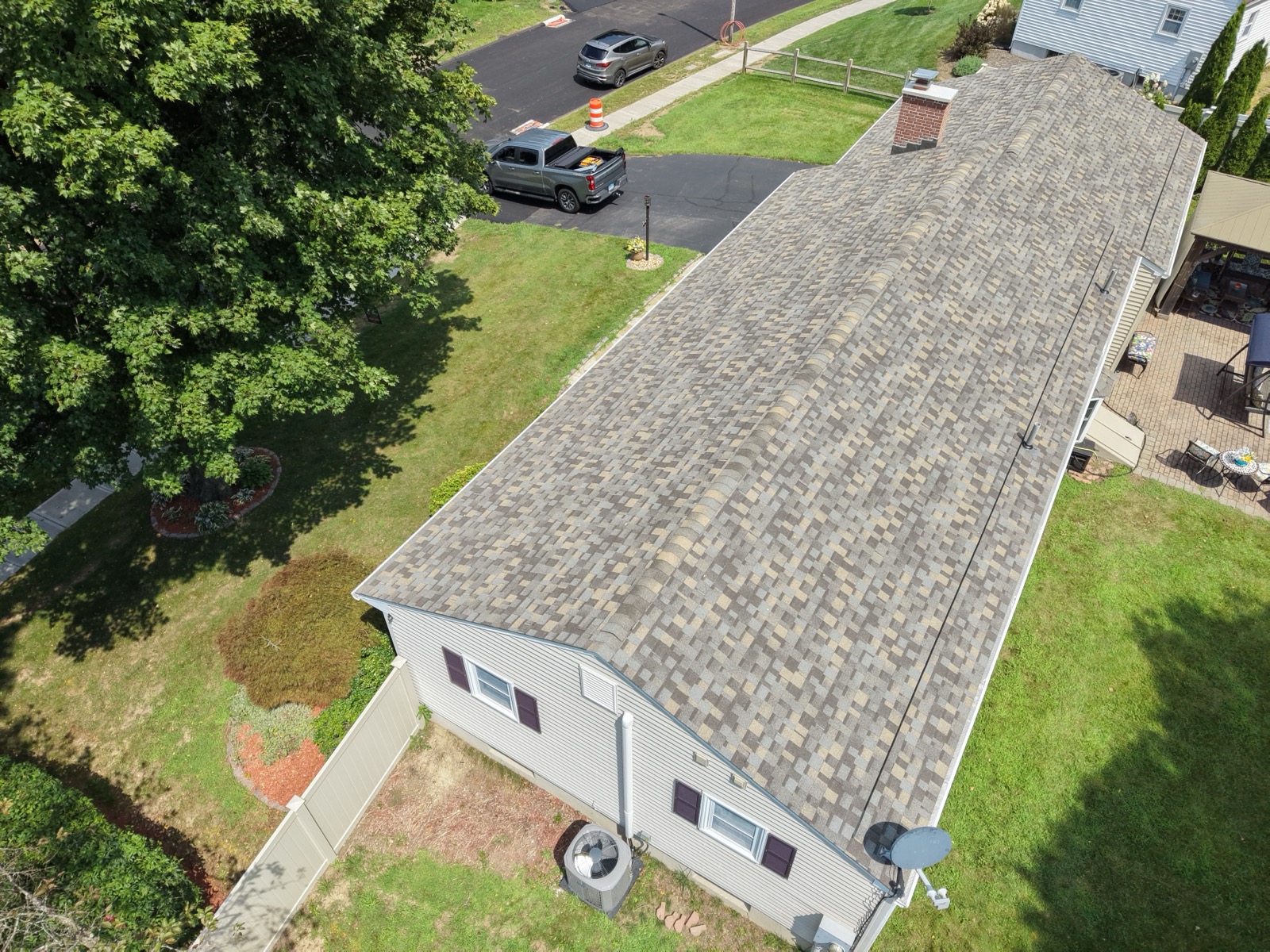
We are the second kind of company, on purpose. Trust Proof Roofing is an owner-operated licensed CT roofing contractor out of Suffield (HIC.0703927, verifiable on the DCP link above), and covered by real workers' compensation insurance. The person who measures your roof is the person responsible for it afterward, and every replacement carries our in-house 20-year leak-proof warranty held right here, not by a holding company. We back it with a best-price guarantee, because a lean company can.
If you are comparing us against a bigger name, good. We want you to. Start with a genuine free 3D roof inspection for your replacement quote, put our number next to theirs, and then ask both companies the five questions above. Not sure whether you even need a full replacement yet? Our guide to repair vs replacement walks the decision honestly, and small repairs run $400 to $600 with a written 1-year leak-proof warranty. Either way, you will know exactly who you hired, because you will have met him. Get your quote here.