Look beyond the exposed edge
The visible metal or sealant is only part of a junction. The assessment considers how water reaches that point and where it should leave. We do not assume a fresh surface bead corrects a concealed arrangement.
Connecticut repair guidance
Leaks beside chimneys, walls and vents often need assessment of several connected layers. Our repair proposal explains the detail being opened, the adjoining materials and what will be restored.
Inspection request, not a confirmed repair appointment. Active leak? Call to confirm availability. No fixed response-time promise.
Suffield-based accountabilityAssessment, written scope and follow-up
One-year repair workmanshipAuthorized repaired area · written terms
Free, no-obligation inspectionRepair work quoted separately
Rebuild the water path at the junction.
The visible metal or sealant is only part of a junction. The assessment considers how water reaches that point and where it should leave. We do not assume a fresh surface bead corrects a concealed arrangement.
Roof flashing, siding, masonry and skylight work can meet in one location. Your scope should state which components our roofing work includes and which require another trade. That avoids paying for a roof-only patch when the problem is higher on a wall or chimney.
We document the worked area and note material-matching or access limitations. Concealed damage discovered during opening is discussed before extending the work. One-year repair workmanship coverage applies to the authorized area under the written terms.
A leak limited to certain storms can indicate a detail that sheds ordinary rain but fails when water is driven toward a joint or backs up. The timing is evidence, not a diagnosis.
We consider wall junctions, flashing laps, roof penetrations, drainage and roof-covering damage. A dry-weather visit may reveal a defect, but it may not reproduce the exact storm conditions. Several paths can lead to the same indoor stain.
Write down which storms caused trouble and whether the leak started immediately or later. A photo of a wet wall or window from inside can help. Do not hose-test a roof yourself or climb up during the weather event.
The repair may involve rebuilding a water-shedding detail rather than covering it with sealant. Access, adjoining materials and how much must be opened affect the scope. Follow-up should compare the same symptom after comparable weather, without promising that every concealed cause is solved by one small patch.
Question index and related guidance →The roof-to-chimney connection is one possible entry path, but masonry, the chimney cap and other adjoining details can also be involved.
We assess the flashing arrangement and nearby roof covering and look for visible evidence that water is entering above that junction. Sealing the outside edge without understanding the concealed laps may leave the underlying path unchanged.
Photograph the indoor symptom safely and tell us whether a chimney or masonry contractor has worked there before. Stay off the roof. A damaged chimney can require a masonry specialist rather than a roofing-only patch.
Our proposal separates roof flashing work from chimney rebuilding, flue or cap work. Access behind siding or counterflashing and concealed decking damage can change the extent of work. We confirm exclusions and the repair-area coverage in writing before opening the junction.
Question index and related guidance →Yes. A penetration detail is a possible entry point, but a nearby stain still needs diagnosis before the vent is blamed.
The assessment considers the boot or flashing, its connection to the covering and the surrounding material. A split flexible collar, an exposed fixing or a poorly arranged lap calls for different work from a plumbing issue inside the pipe.
From the ground, note which roof plane sits above the wet area. There is no need to identify the exact fitting from a ladder. Avoid disturbing a vent or covering its opening; it has a separate building-system function.
The written repair identifies the penetration and compatible replacement detail, including how it will join the existing roof. Plumbing changes are excluded unless separately arranged. A visible bead of sealant should not be presented as equivalent to rebuilding a failed flashing connection.
Question index and related guidance →These junctions concentrate water or interrupt its path down the roof. The layers must direct water out onto the roof or into drainage, rather than behind a wall.
We look at the junction as an assembly: covering, concealed flashing or membrane, adjacent siding and drainage. A small visible defect may require opening a larger area to make a sound connection. A photograph cannot show all the layers.
Describe where the indoor symptom appears relative to an addition, dormer or wall. Keep old repair photos if you have them. Do not pull siding or shingles aside to inspect the detail yourself.
The scope should explain what will be removed, how the junction will be rebuilt and which finishes can be reused. Our real Suffield and New Britain examples show wall-junction work, not proof that the same method fits every house or material. Hidden damage is handled through an agreed change in scope.
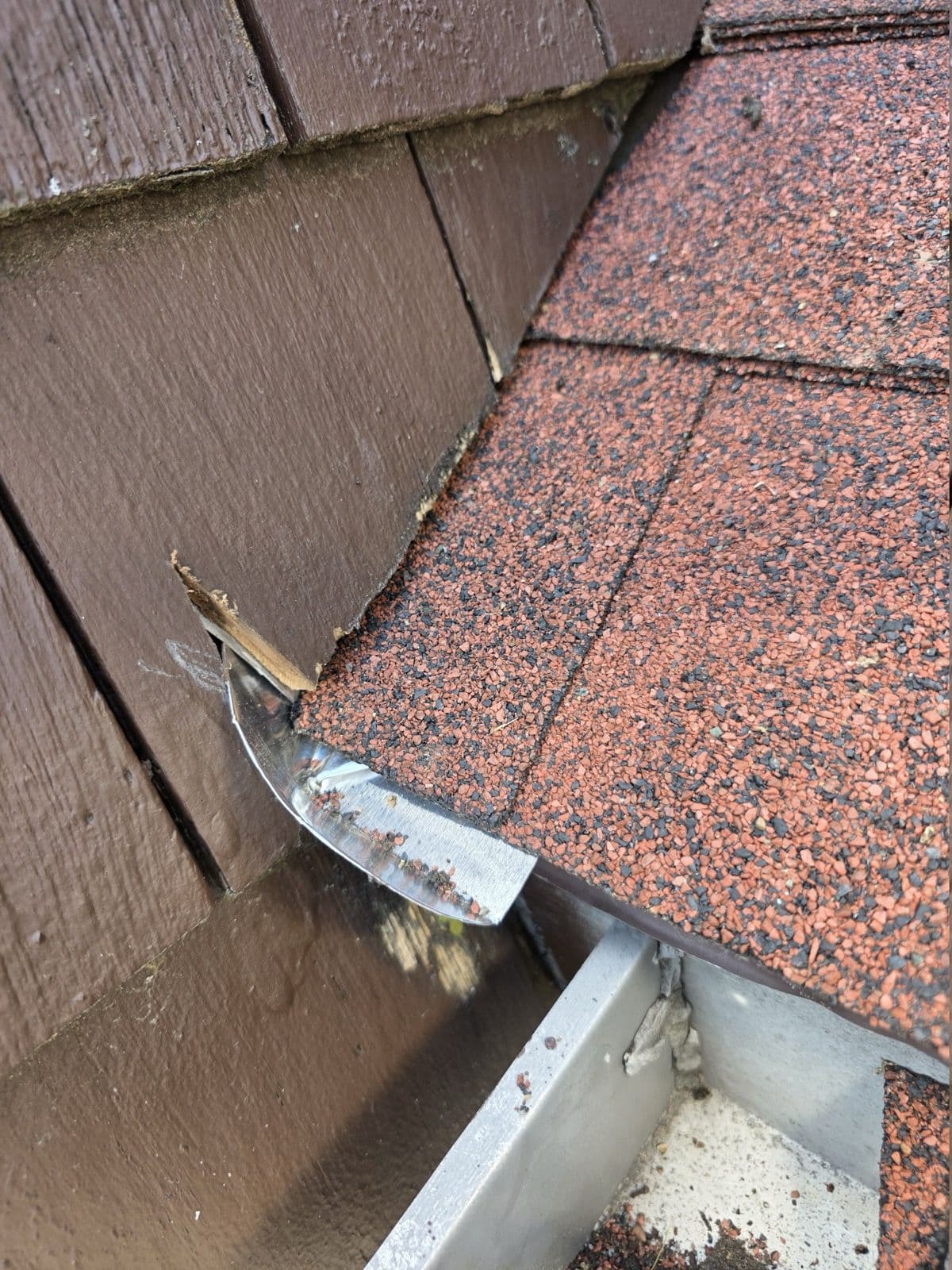
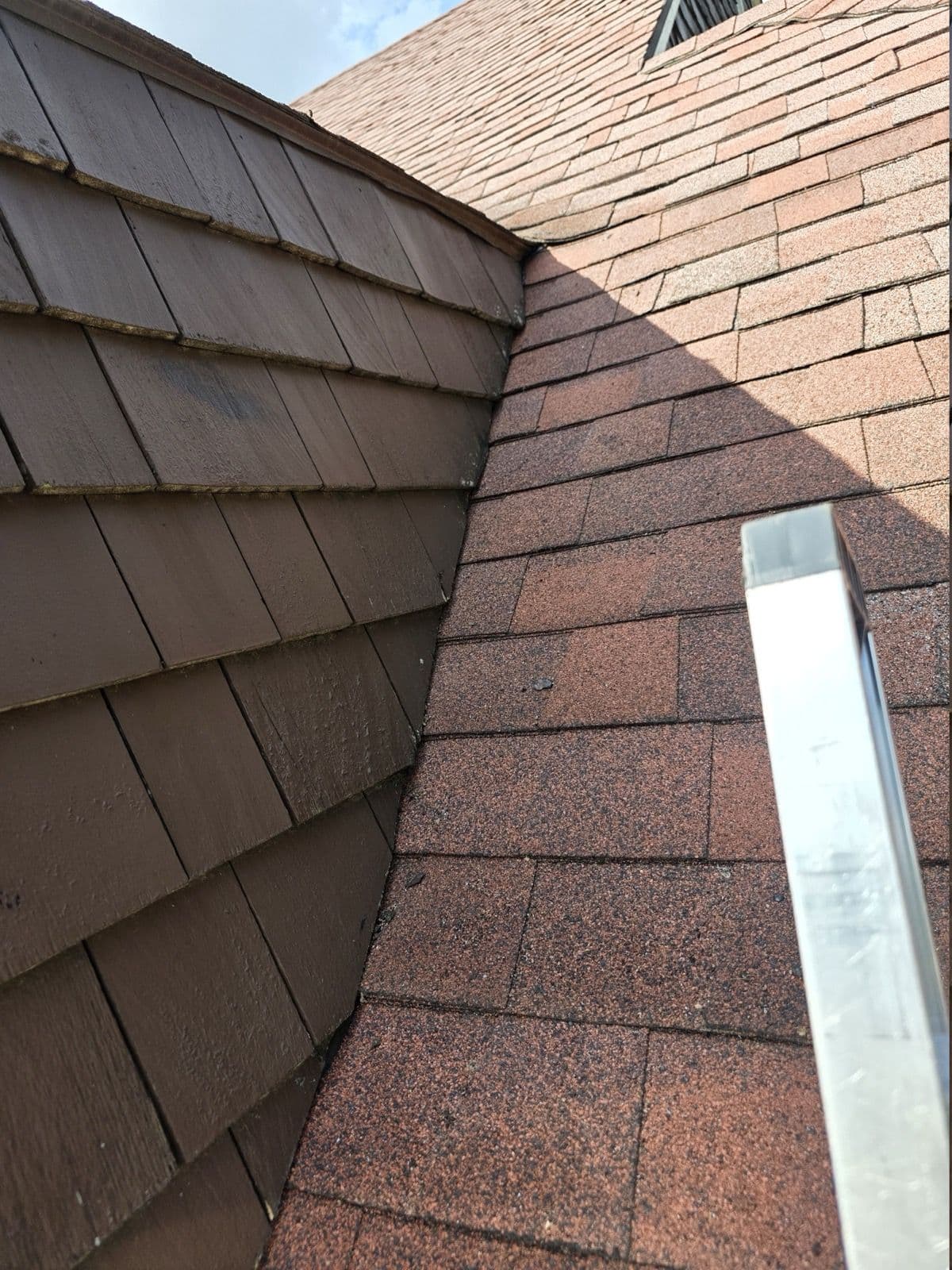
Question index and related guidance →Work and finished views from the same documented New Britain, Connecticut roof-to-wall repair.
Who is responsible?
Trust Proof Roofing LLC is based in Suffield. We take responsibility for coordinating the assessment, explaining the authorized scope, supervising the roofing work, protecting the work area, cleanup and follow-up. You should know who to contact when a question comes up after the visit.
We provide a free, no-obligation initial inspection. Photo documentation and 3D inspection tools can help explain visible roof conditions and dimensions; they do not see through shingles, prove the source of every intermittent leak or replace an on-site assessment. Any opening-up or additional investigation is agreed separately.
Tell us where you need help and request a free repair assessment. We confirm the assessment and timing with you before a repair appointment is arranged.
For an active leak, call (959) 333-8569. Tell us the conditions from a safe location. Availability, safe access and weather determine what can happen next.
We review the findings with you, confirm the written scope and explain one-year workmanship coverage for the authorized repaired area. You are free to decide whether to proceed.
Request a free repair assessment
Tell us where help is needed. We confirm the assessment and timing with you. Free · no obligation.
Free · no obligation · Registered CT contractor HIC.0703927