(959) 333-8569
Updated 2026

The Connecticut Roof Maintenance Guide.
Checklist · Seasonal · Annual.

Everything we'd tell a friend about maintaining an asphalt or architectural shingle roof in Connecticut — written from the perspective of the guy who shows up at 7am with a ladder, not the marketing department.

T
Tenzin, Founder
·CT HIC.0703927·3,500-word guide

Quick reference

The roof maintenance checklist, at a glance.

Spring

Apr–Jun

Annual inspection. Ice-dam damage check.

Summer

Jun–Aug

Tree trimming. Storm-aftermath checks.

Fall

Sep–Nov

Gutter clean. Pre-winter pro inspection.

Winter

Dec–Mar

Ice-dam watch. Roof rake after heavy snow.

The number that drives every check

95% of roof leaks come from flashing — not shingles.

Source: NRCA Roofing Manual. Every checklist in this guide is built around that fact.

01

Chapter 1

Why Connecticut roofs need different maintenance.

A roof in Hartford goes through more thermal cycling in a year than a roof in Charleston does in three. Connecticut sits at the intersection of three weather regimes — coastal nor'easter influence from the Long Island Sound, continental cold from upstate New York and Canada, and warm humid air pushing up the Atlantic seaboard in summer. The asphalt shingle on your house expands and contracts every day, freezes and thaws every winter, and bakes under summer sun that gets through tree canopy in unpredictable patterns. Roof maintenance built around Florida or Texas conditions misses what kills CT roofs.

Three things matter specifically here. First, ice dams — the single largest source of preventable damage we see. Second, attic ventilation — the silent driver behind early shingle failure, more important than the shingle brand. Third, flashing detail integrity — because the freeze-thaw cycle attacks every seam between two materials, and a CT roof has more such seams than a warm-climate roof of equivalent size.

Connecticut also updated its building code in 2018 to require ice-and-water shield over living spaces in most residential roof assemblies. If your roof was installed before that update, the eaves and valleys are statistically more vulnerable to ice-dam back-flow — meaning the roof maintenance cadence for older CT roofs should be tighter, not looser.

02

Chapter 2

How often to actually inspect your roof.

Once a year, plus after weather events. That's the answer, and the rest is calibration.

The single annual professional roof inspection should land in spring — late April to early June in Connecticut — after the freeze-thaw cycle has stressed the assembly and before the summer storm season piles on. Anything that needs repair gets repaired before fall. Anything questionable gets monitored. Anything fine gets photographed for the file and you go on with your life.

On top of the annual professional roof maintenance check, run an unscheduled inspection after:

  • Any wind event with gusts above 50 mph (CT typically sees several per year, especially in spring nor'easter season).
  • Any hail event, regardless of hail size — per IBHS, even small hail can compromise the granule layer of asphalt shingles.
  • Any tree-fall on or near the roof, even if the tree didn't visibly hit the shingles.
  • The first significant ice dam visible at your eaves in winter.
  • Any new interior water stain, even a small one.

Between professional visits, do quick self-checks every couple of months — from the ground, with binoculars. Five minutes of looking will catch most patterns worth catching.

03

Chapter 3

The seasonal roof maintenance cycle.

Spring

April–June

Your biggest check window.

  • Walk the yard and look for shingle granules near downspout splash blocks. Granule loss is the canary for UV aging.
  • Look at the roof from the ground with binoculars. Check ridges and rakes for lifted shingles from winter wind.
  • Inspect the attic during a sunny mid-morning. Daylight through the deck at flashing penetrations is normal; broader light is a problem.
  • Check eaves for ice dam damage — water stains on the underside of the deck, soft sheathing, compressed insulation.
  • Clean debris out of gutters and visible valleys.
  • Book a professional roof inspection if anything looks off.

Summer

June–August

Storm season + tree management.

  • Trim tree branches that overhang or contact the roof. Aim for at least 6 feet of clearance.
  • Walk the property after thunderstorms. Look for shingles in the yard or driveway.
  • Check chimney mortar joints from the ground — visible cracks mean the counterflashing seal is at risk.
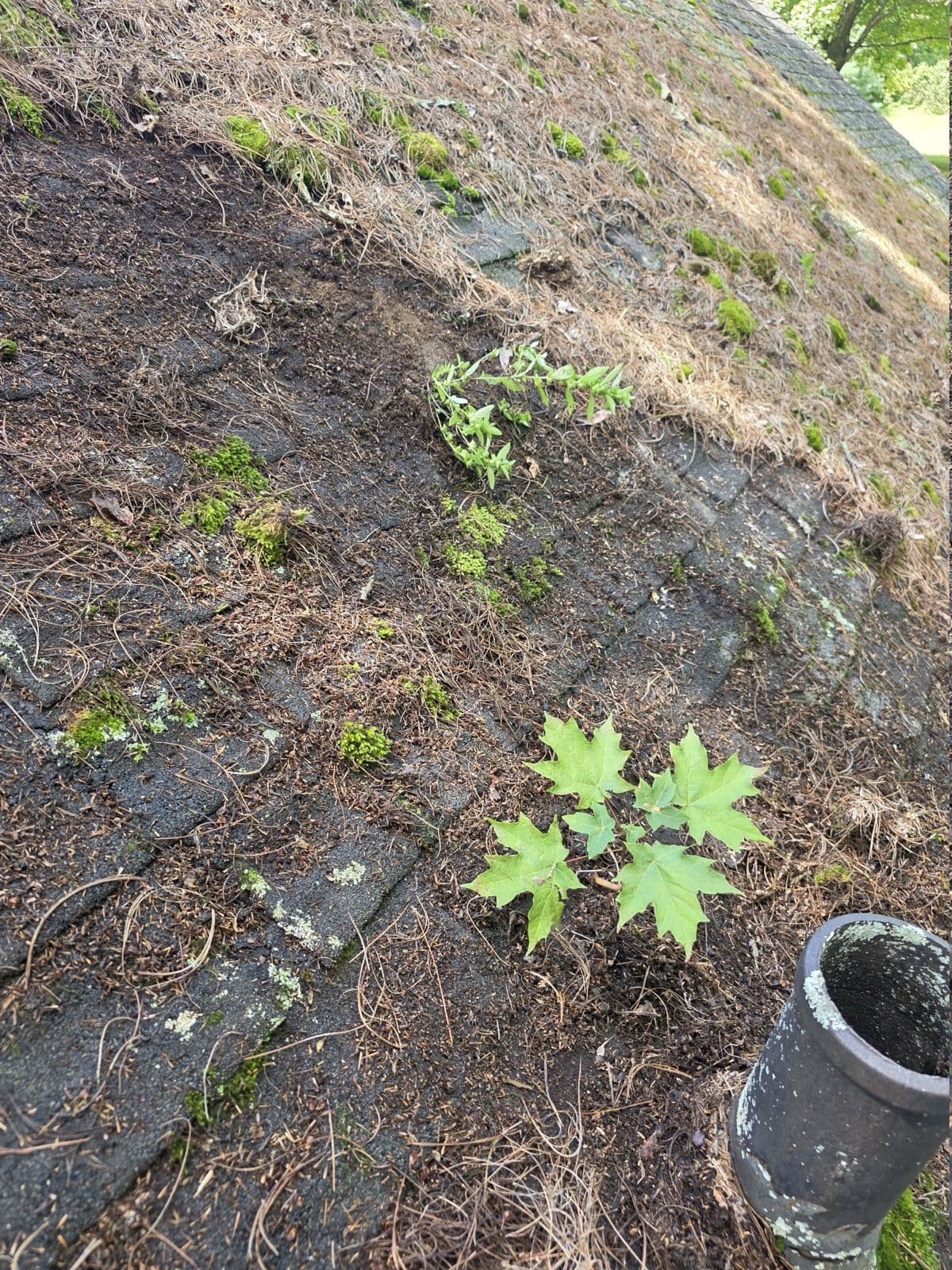
  • Watch for moss or algae growth on the north-facing slope. Streaks indicate Gloeocapsa magma and may warrant treatment.
  • On older roofs, monitor for granule loss across the field.

Fall

September–November

Prep for winter, repair what won't wait.

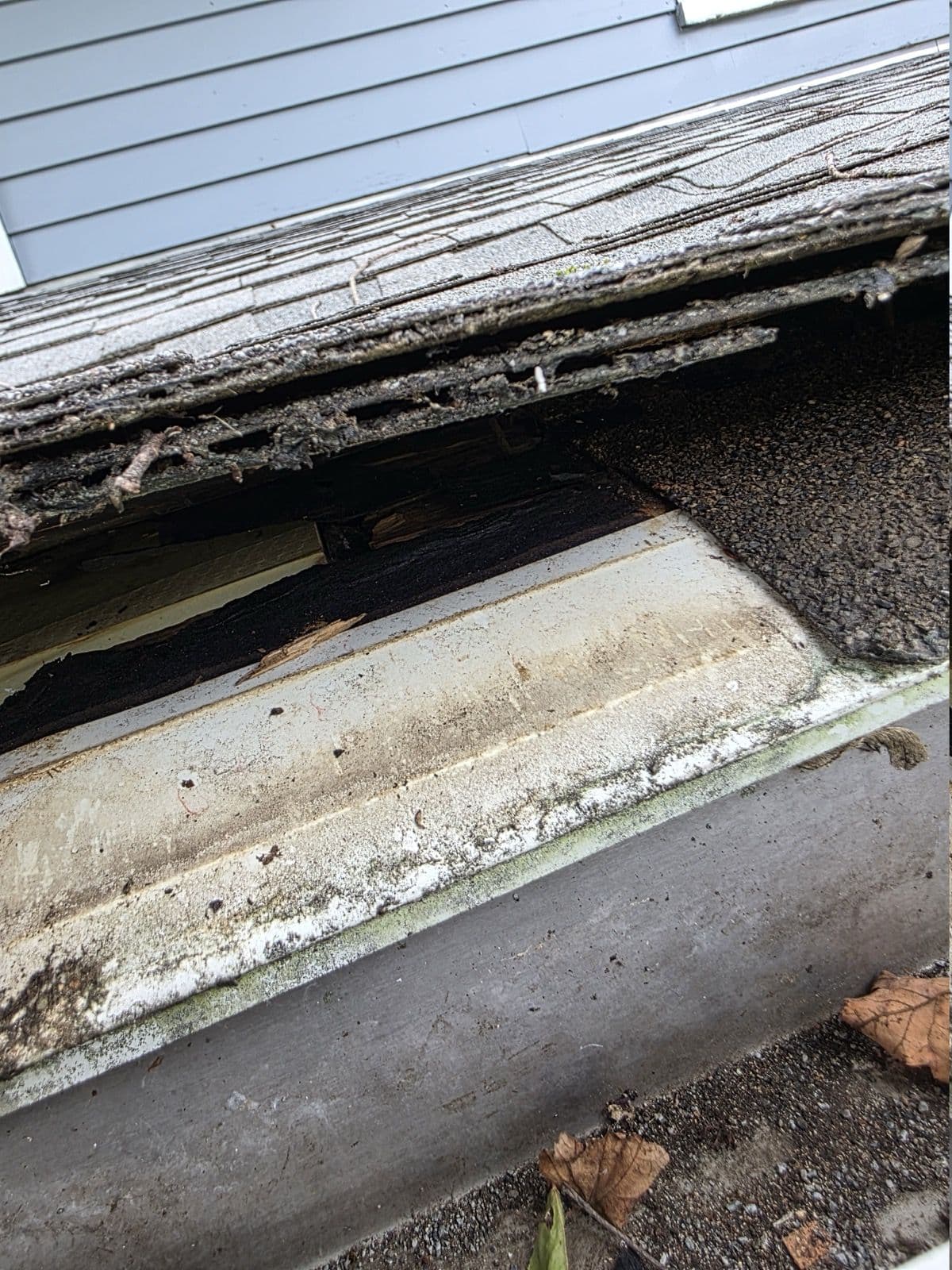
  • Clean gutters fully after most leaves have dropped. Backed-up gutters are the #1 cause of fascia rot.
  • Inspect downspouts — they should discharge at least 4 feet from the foundation.
  • Check vent pipe boots for cracks or UV deterioration. EPDM rubber typically fails at 8–12 years on a CT roof.
  • Schedule a professional roof maintenance check before snow loads arrive. Repair in October–November, not deferred to spring.
  • Verify attic insulation and ventilation. Per the U.S. Department of Energy, proper R-value and ventilation prevent the warm-roof condition that drives ice dams.

Winter

December–March

Watch and react, don't climb.

  • Watch eaves for icicle formation. Significant icicles are a sign of ice dam risk forming behind them.
  • After heavy snow (8+ inches), consider professional roof raking from the ground. Never walk a snow-loaded roof.
  • Inside the home, watch ceilings during thaw cycles for any new water stains.
  • Listen during high-wind events. Loud popping or scraping can indicate lifted shingles or flashing.
  • Do not chip ice off the roof yourself — you'll damage shingles and probably yourself.
04

Chapter 4

The annual professional roof inspection checklist.

This is the literal checklist a Trust Proof crew runs on your roof during annual maintenance. We don't hide the methodology because the methodology is the value — any reasonable contractor should be running something similar. If yours isn't, you're paying for a glance.

01

Field shingle inspection

Walk-down or close binocular check of every roof slope. Lifted tabs, cracked shingles, granule loss zones identified and photographed.

02

Flashing detail check

Chimney apron and counterflashing, skylight perimeters, sidewall step flashing, valley metal, kick-out flashing where present. NRCA reports 95% of leaks originate at these details.

03

Vent boot inspection

Every plumbing stack, bathroom exhaust, and attic vent. Rubber pipe collars are a known service-life weak point.

04

Ridge vent and ridge cap check

Ridge takes the highest wind exposure. Lifted ridge caps are common after CT spring storms.

05

Gutter and drip edge inspection

Gutter slope, downspout discharge, drip edge integrity at eaves and rakes. Loose gutters pull drip edge with them and create eave leaks.

06

Attic conditions check

Insulation depth and condition, ventilation pathway, moisture indicators on the deck underside. Most early roof aging issues show in the attic first.

07

Photo documentation

Date-stamped photos of every detail, attached to a written report. Useful for insurance baselines and tracking changes year over year.

05

Chapter 5

Attic ventilation — the part nobody thinks about.

If we could change one thing about how CT homes are built, it'd be that more of them had been built with proper attic ventilation from day one. Manufacturer warranties on asphalt shingles assume balanced soffit-and-ridge ventilation; many CT roofs we inspect have soffit vents painted shut, undersized ridge vents, or no ridge vent at all. The shingle product is rated for 30 years. The actual install delivers 18.

What proper ventilation does is move air through the attic — cold air in at the soffits at the eaves, warm air out at the ridge. In summer, this prevents the attic from becoming a 140°F oven that bakes the shingle adhesive from below. In winter, this prevents the attic from being warm enough to melt roof snow (the warm-roof condition that drives ice dams). The U.S. Department of Energy documents both effects and recommends specific net free vent area ratios.

What to check yourself: walk into the attic on a hot summer day. If it's significantly hotter than the outside temperature, ventilation is undersized. Look at the soffit vents from outside — if the holes are blocked with insulation, paint, or debris, the system isn't working. Check whether you have a ridge vent — it's a low-profile vent running along the peak of the roof under the ridge cap shingles.

If ventilation is the problem, the fix is usually achievable as a roof maintenance upgrade rather than a full reroof — add a ridge vent during a small reroof of the ridge, install baffles to keep soffit insulation back from the vents, and replace any painted-over soffit vents. Worth doing before the next replacement, because it can add several years to the existing shingles.

06

Chapter 6

Ice dams — the CT-specific roof maintenance problem.

The single largest preventable source of leak calls Trust Proof handles is ice dam back-flow at the eaves. The mechanism is consistent: snow accumulates on a roof. Heat escaping from the heated living space below warms the roof from underneath. Snow melts on the warm middle of the roof, runs as water down the slope, and refreezes when it hits the cold overhang at the eave (which extends past the heated envelope of the house). A dam forms. More meltwater hits the dam and pools behind it. Pooled water, under hydrostatic pressure, finds its way under the shingles and through the deck.

The leak shows up inside in February or March. The homeowner calls and asks for a roof repair. We arrive and tell them the roof itself is fine — what failed is the heat-leak from the attic that created the warm-roof condition in the first place.

Per the Insurance Institute for Business & Home Safety, the prevention strategy is three-layered: proper attic insulation (the heat shouldn't reach the deck in the first place), proper attic ventilation (any heat that does reach the deck should vent before warming the snow), and sealed ceiling penetrations between the heated space and the attic. The ice-and-water shield under the eaves — required by CT code since 2018 — is the last-line defense if the first three fail.

Mid-winter, when you see icicles forming at the eaves, that's the visible signal of the warm-roof condition. Heavy icicles mean you have a dam forming behind them, even if you can't see the ice ridge on the roof itself. Don't try to chip them off — call us for professional roof raking from the ground, or let them go and address the underlying insulation issue once the season ends.

07

Chapter 7

When roof maintenance becomes roof repair.

Some signals you can spot without climbing the ladder. Any one of these turns your maintenance check into a repair call.

Shingles in the yard after a storm.

The shingles came from somewhere. Look up before assuming it's the neighbor's.

Granule accumulation at downspout splash blocks.

Localized loss = a problem with one slope. Widespread loss = end-of-UV-life.

Visible curling or cupping from the ground.

The shingle is past its bond age.

Any new interior water stain.

Even a small one. The leak doesn't stop on its own.

Daylight visible through the deck from inside the attic.

A new gap is a developing leak.

Sagging in the roof line from the curb.

Structural — could be a truss, could be deck rot. Either way, urgent.

Loose or visibly damaged flashing at the chimney or skylight.

95% of leaks start here per NRCA.

Each is the moment maintenance becomes repair. We have dedicated pages for the patterns we see most:

08

Chapter 8

Roof and gutter maintenance — they fail together.

Roof and gutter maintenance are inseparable in Connecticut. Gutters that don't drain properly back water up against the drip edge, which sends water down the underside of the eave, which rots fascia and soaks the wood the drip edge is nailed to. By the time you see fascia damage from the ground, the wood behind it has usually been wet for months.

Two annual gutter checks — late spring and late fall — handle most of what matters. Clear leaves and debris. Verify the gutter slope is positive toward the downspout (a level run is a stagnant run). Check that downspouts discharge at least 4 feet away from the foundation. Look for pulled-away gutters at the fascia — pulled gutters take the drip edge with them.

On the roof side, the drip edge that meets the gutter is one of the most overlooked maintenance details. It's a piece of bent metal that redirects water from the deck edge into the gutter. If it's missing, bent, or pulled away, water runs behind the gutter instead of into it. We check drip edge integrity on every annual roof maintenance inspection.

For full roof and gutter repair scope — gutter cleaning, repair, or seamless replacement — see our roof and gutter repair page. Combined roof + gutter scope quoted in one visit, photo-documented, 1-year workmanship warranty.

09

Chapter 9

When the roof is aging out.

Past a certain point, roof maintenance is throwing money at a problem that's going to keep generating problems. The honest signals that you're past maintenance and into replacement territory:

  • Architectural roof past 22–25 years; 3-tab roof past 18 years.
  • Three or more repair calls in the same year.
  • Granule loss visible from the ground across multiple slopes.
  • Multiple curled, cupped, or cracked shingles spread across the roof.
  • Soft or rotted decking discovered during repair.
  • Daylight visible through the deck at multiple locations.
  • Damaged flashing combined with widespread shingle aging.

We have a longer breakdown of the decision math at repair vs replacement in Connecticut. Short version: cost per remaining year of life is the better math than the up-front number.

CT replacements typically run between $9,000 and $18,000 depending on size, pitch, and material — per the NAR / Remodeling Cost vs. Value Report, Northeast roofing runs roughly 15% above the national average.

10

Chapter 10

What roof maintenance services actually cost in CT.

Annual roof maintenance for a typical Connecticut home runs a manageable budget — well under the cost of any single preventable leak.

Professional annual roof inspection

From most licensed CT roofers. Free with any Trust Proof repair or replacement quote.

$200–$400

Gutter cleaning (twice a year)

Late spring and late fall — clears debris before it dams water.

$150–$300 per visit

Tree branch trimming near roof

Every 2–3 years. Keeps clearance 6+ feet from the roof line.

$300–$800

Algae or moss treatment (if needed)

One-time soft wash; consider zinc strips at next replacement.

$300–$600

Small repair if caught early

Trust Proof published small-tier — single flashing or shingle area.

$400–$600

All-in, you're looking at $500–$1,500 a year on the high side. Against a preventable leak that turns into $4,000 of decking and insulation work — or worse, a leak that contributes to taking 3–5 years off the roof's life — this is well-spent money.

For a detailed breakdown of our repair pricing, see roof repair cost in Connecticut.

Book your inspection

Free annual roof inspection with any quote.

Photo-documented findings, written report, no obligation. Mon–Sat windows.

Get Your Roof Quote

Replacement or repair · 60 seconds · No phone tag

What can we help with?

Licensed CT HIC.0703927 · Fully insured · No phone tag

CT HIC HIC.0703927Photo-documentedWritten report
Architectural asphalt shingles on a Connecticut home, properly maintained

Healthy architectural shingles

Granules intact, sealed bonds, flat course

Trust Proof Roofing crew performing annual maintenance inspection on a Connecticut brick colonial

Annual inspection in progress

Hartford County · documented check

Completed roof replacement on Connecticut colonial home after maintenance signals indicated end of life

Replacement, when the time came

Maintenance bought years; this finished the job

Common questions

Roof maintenance questions, answered.

How often should I have my roof inspected in Connecticut?

Once a year, plus after any major weather event. The standard professional roof inspection cadence in CT is spring — after the freeze-thaw cycle has stressed the assembly through the winter. Add an unscheduled inspection after any wind event over 50 mph, hail event, ice dam season, or tree-fall. Self-checks from the ground every couple of months catch most of what a homeowner can spot without professional access.

How long does an asphalt shingle roof last in Connecticut?

Architectural asphalt shingles installed correctly deliver 25–30 years in CT conditions. 3-tab shingles 18–22 years. The biggest variable in real-world lifespan is attic ventilation — poorly ventilated roofs in CT routinely fail 5–10 years early because trapped heat bakes the shingles from below. Per the U.S. Department of Energy, proper attic ventilation also reduces ice dam risk and lowers cooling costs.

What should I do for my roof every spring?

Spring is your big roof inspection window after the winter freeze-thaw cycle. Walk the yard and look for shingle granules collected at downspout splash blocks. Look up the rake and ridge from the ground for any lifted or missing shingles. Check the attic during a sunny mid-morning for daylight visible through the deck. Clean any debris out of gutters and visible valley sections. Book a professional roof maintenance inspection if anything looks off.

Can I walk on my roof to inspect it?

Strongly recommended against. Most CT homes run 6/12 to 9/12 pitch, which is steep enough that even dry asphalt is a slide. Most professional roof inspections we do don't require walking the whole roof — a ladder check at the eaves and ridge, plus binoculars from the ground for the field, picks up 90% of what matters. The other 10% requires fall protection equipment most homeowners don't own. Hire a pro for the on-roof inspection, or limit yourself to ladder-based and ground-based observation.

How much do roof maintenance services cost in CT?

Trust Proof Roofing free annual roof inspections come with any repair or replacement quote. Standalone professional inspections from licensed CT roofers typically run $200–$400 depending on roof size and access. Gutter cleaning runs $150–$300. Tree branch trimming near the roof line runs $300–$800. Combined annual roof maintenance budget for a typical CT home: $500–$1,500. Against the cost of preventable leaks, this is well-spent money.

What's the worst time of year for CT roofs?

Late winter into early spring. February ice dam season generates more leak calls than any other month for Trust Proof. The cycle is consistent: a warm January or February day melts snow on a warm roof; the meltwater runs to the cold eave; refreezes; meltwater behind the dam backs up under the shingles. By March, homeowners are calling us with ceiling stains they didn't have in January. The fix is rarely the roof itself — it's the insulation and ventilation in the attic above the heated space. The Insurance Institute for Business & Home Safety has documented this for years.

Should I have my roof cleaned or treated?

Generally no on cleaning. Asphalt shingles are designed to weather; pressure washing strips granules and shortens the roof's life. Soft washing (low pressure, sodium hypochlorite solution) can remove black streaks (Gloeocapsa magma algae) but should be done by a roofer who understands the chemistry, not a general pressure-washing contractor. Treatments like zinc strips at the ridge can prevent algae growth long-term and add roughly 1–2% to a replacement cost — worth considering on a new roof, not worth retrofitting on an existing one in most cases.

What are signs my roof needs more than maintenance?

Granules in gutters and at downspouts suggest the roof is near end-of-life. Multiple curling, cupping, or cracked shingles across different slopes suggests systemic UV aging. Three or more repair calls in a single year. Daylight visible through the deck from inside the attic. Soft or rotting decking found during inspection. A roof over 25 years old (architectural) or 18 years (3-tab) regardless of visible condition. Any one signal warrants a replacement consultation alongside the repair quote.

Do you handle annual roof maintenance contracts?

Not as ongoing contracts — we don't lock customers into recurring billing. What we do is offer free annual roof inspections as part of our 1-year repair warranty and 20-year replacement warranty programs. Past customers can book a free roof maintenance check through our intake form any time. Most CT homeowners we serve don't need more than that.

Do you do roof and gutter repair as a combined service?

Yes. We handle gutter cleaning, gutter repair, and seamless aluminum gutter replacement — alongside roof scope or as standalone gutter work. See our roof and gutter repair page for details. Combined roof + gutter scope is typically less than two separate visits.

Book your free annual roof inspection.

all 8 CT counties. Mon–Sat windows. Photo-documented report.